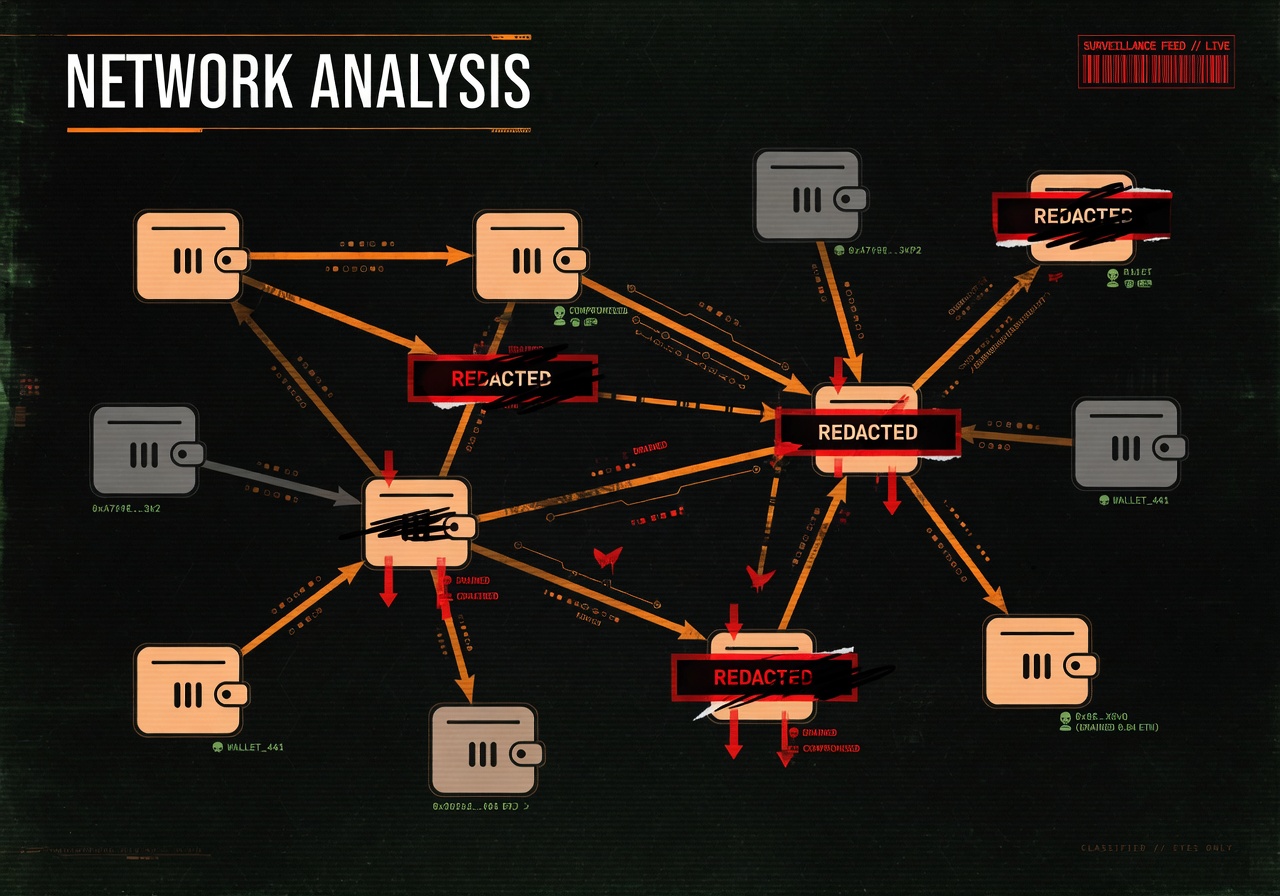
Redacted domain dossier, minus the house style
We are far too editorially nervous to tell you whether the upstream publisher is correct. We can, however, preserve the dossier, keep the indicators readable, and route every external exit through the source gate.
Why this matters — ICANN RAA §3.18 obligation
On THE ENABLERS REGISTRY delivered an evidence-backed abuse report
to abuse@name.com with VirusTotal detections, urlscan capture, legal violations, and full screenshot evidence.
More than 6 months later, the possibly phishing infrastructure remains reachable
.
Under ICANN RAA §3.18 accredited registrars are contractually obliged to “take reasonable and prompt steps to investigate and respond appropriately to any reports of abuse.” Silence beyond 24 hours after a documented notification with verifiable evidence is not a timing issue — it is a policy decision to let the operation continue. THE ENABLERS REGISTRY\'s position: where a registrar fails to act on clear evidence, the registrar has aligned itself with the operator of the scheme and bears co-responsibility for downstream harm caused to victims from the moment of notification onward.
The page title returned by the server was “Primal Airdrop | Phase 1”, aligning with the possibly phishing kit identified as an “Airdrop Scam” and the Angel Drainer payload used for wallet/seed credential harvesting. The campaign explicitly impersonates NASDAQ:COIN, as indicated by the brand target field, and employs a wallet/seed possibly phishing technique to exfiltrate private keys. Reputation data show the domain appears on one security blocklist and has been blocked by THE ENABLERS REGISTRY. AlienVault OTX lists the domain in three separate threat‑intel pulses, confirming community awareness of its malicious use.
VirusTotal analysis recorded detections from 13 of 95 scanning engines, reinforcing the malicious classification. Although the site is no longer reachable, defenders should continue to monitor the associated IP, ASN, and the four nameservers for any re‑use, and enforce strict blocking of the domain and its infrastructure in network filters. Users of NASDAQ:COIN should be warned about unsolicited “airdrop” offers that request seed phrases, and incident response teams should treat any credential submissions to this domain as compromised. Further investigation is required to determine whether the nameservers are being leveraged for other possibly phishing or drainer campaigns, but the existing evidence already warrants a high‑risk rating and immediate defensive action.

Threat Response Pipeline
Public Blocklist Status
Evidence Capture
![Forensic screenshot of [REDACTED] showing the phishing page layout](https://urlscan.io/screenshots/019b2ecd-2460-7599-9d5d-44e80f647854.png)
Domain Intelligence
 (US)
(US)

Technical detailsDNS, SSL SANs, timestamps
Technologies · 1 identified
Free public CDN for open-source projects, serving files from npm and GitHub.
VirusTotal Analysis
Archived Evidence
Evidence & External Reports
 URLScan
“=== DRINER KIT COMPLETO === Possibly phishing Site: [REDACTED] (fake SOL airdrop) VICTIM WALLET ETH: 0x794a299251d9b4129048567d291128d17e7fcae3 DRAIN TX: 0xdc46ccd32bb3a2cf3b8f4249839fad727063f7058111e1ae69d76f6762976e40 TX Explorer: https://etherscan.io/tx/0xdc46ccd32bb3a2cf3b8f4249839fad727063f7058111e1ae69d76f6762976e40 MALICIOUS CONTRACT: 0x4ee879f39cce3c4ca80e2ee90f9df5afeeaeb220 Contract Explorer: https://etherscan.io/address/0x4ee879f39cce3c4ca80e2ee90f9df5afeeaeb220 COLLECTOR”
Were You Affected by This Site?
If you have interacted with this domain, entered personal information, or connected a cryptocurrency wallet — take immediate action. Below are resources to help you report the incident and protect yourself.
Report to Your Local Authorities
Select your country to get official cybercrime contacts, or generate an AI-powered complaint →
Related Domain Reports
Other Domains on 91.214.78.65 2 possibly phishing domains
This IP hosts multiple possibly phishing domains — infrastructure shared across campaigns
More Domains at [REDACTED] 6 flagged
Other NASDAQ:COIN Impersonation Domains
These domains also target NASDAQ:COIN users. View all NASDAQ:COIN threats →
Airdrop Scam Campaign Domains
Part of the Airdrop Scam possibly phishing campaign. View all campaign domains →
About This Report: [REDACTED]
This report presents the latest stored evidence available to THE ENABLERS REGISTRY. Source timestamps are shown where available; availability and vendor verdicts can change after collection.
The site displays a page titled “Primal Airdrop | Phase 1”, which may be designed to impersonate NASDAQ:COIN.
[REDACTED] has been flagged by 13 security vendors as of July 28, 2026. This site has been identified as a Angel Drainer.
If you believe this listing is inaccurate, you can submit an appeal. For more information about our methodology, visit our FAQ page.
Check Any Domain
Threat analysis using stored blocklist, WHOIS, DNS, and public scan evidence
Scan NowReport Possibly phishing
Submit suspicious domains to our threat database — protect the community
ReportLive Threat Feed
Recent possibly phishing reports and observed availability changes
MonitorStay Informed, Stay Safe
Monitor live threats or contest this listing if you believe it's a false positive
Recommendations & Advice for Victims
An estimated $51 billion flowed to illicit crypto wallets in 2024 (source). If you interacted with [REDACTED] — act now.
What should I do immediately?
Urgent
- Revoke token approvals — use revoke.cash to remove access granted to malicious smart contracts
- Move remaining funds to a brand-new wallet. The compromised wallet is no longer safe
- Change all passwords — email, exchange accounts, anything that shares the same password
- Enable 2FA using an authenticator app (not SMS). Disable SMS-based recovery
- Freeze cards if you entered banking details on the possibly phishing site
What information should I collect for my report?
FBI guidelines
According to the FBI, the most important details are transaction data:
- Cryptocurrency addresses — scammer's wallet (e.g.,
0x5856...35985) - Amount & crypto type — exact amount (e.g., 1.02345 ETH, 0.5 BTC, 500 USDT)
- Transaction ID (hash) — the unique blockchain transaction identifier
- Exact dates & times — of each transaction and first contact with scammer
- Screenshots — scam website, chat messages, emails, wallet transactions, social media
- All URLs & domains used by the scammer (including
[REDACTED]) - Communications — emails, texts, phone numbers, usernames the scammer used
Even if you don't have all details — file a report anyway. Partial information still helps investigations.
Where should I report the scam?
- FBI IC3 — Internet Crime Complaint Center (US federal reporting)
- Europol — European cybercrime reporting (EU)
- Chainabuse — flag scam wallets across exchanges & platforms
- Your crypto exchange — contact NASDAQ:COIN/LEI:5493004F7TI6QBM4WX72/FinCEN MSB #31000023456789 support to freeze scammer's address
- Local police — creates an official record, even if they can't act immediately
The FBI recovered over $1 billion in crypto fraud in 2024 thanks to victim reports. Your report matters.
How do crypto scams typically work?
- Fake websites — pixel-perfect clones of legitimate sites with slightly altered domains
- Malicious approvals — "connect wallet" prompts that grant unlimited token spending to attackers
- Pig butchering — trust built over weeks via [REDACTED]/WhatsApp/dating apps, then money stolen
- Recovery scams — victims targeted AGAIN by fake "recovery agents" demanding upfront fees. Always a scam
- Fake ads & airdrops — Google/social media ads and "free token" offers leading to wallet drainers
- AI-powered scams — deepfakes, automated possibly phishing, and AI-generated sites making fraud harder to detect
How can I protect myself in the future?
- Use a hardware wallet ([REDACTED], [REDACTED]). Never store large amounts in browser wallets
- Bookmark official sites — never click links from emails, DMs, or ads
- Read every approval — verify permissions before signing. Reject unlimited approvals
- Verify domains — check on THE ENABLERS REGISTRY before interacting. Check HTTPS, spelling, domain age
- "Too good to be true" = scam — guaranteed returns, celebrity endorsements, urgent deadlines
How big is the crypto scam problem?
- $51 billion flowed to illicit crypto wallets in 2024 — CoinLedger
- Pig butchering losses grew 40% year over year, now the fastest-growing fraud type
- Only ~5% of victims report — your report helps shut down criminal networks
- FBI recovered $1B+ in 2024 thanks to victim reports — FBI.gov
Sources: FBI · CoinLedger · WorldMetrics
Archive note
If the page below still says “we” or sounds suspiciously confident, that remains the upstream publisher speaking. TER only preserves the record, strips the house branding, and keeps exits wrapped through the source gate.